
When and How to Wear a Tennis Elbow Brace
Key Takeaways
- A counterforce brace may help reduce stress on the forearm tendons and ease symptoms during activity.
- The brace should feel snug and supportive without causing numbness, tingling, swelling, or increased pain.
- Wearing a brace is generally one part of a broader recovery plan rather than a permanent solution.
- Stretching and strengthening exercises may support recovery when appropriately prescribed.
- Persistent or worsening symptoms may warrant an evaluation by a healthcare professional.
A brace can be a useful part of tennis elbow treatment, particularly when gripping, lifting, typing, playing sports, or repetitive arm movements trigger discomfort. But wearing one does not address every factor behind the condition. For people dealing with persistent tennis elbow, knowing when to use a brace, how to position it, and when to seek professional care can make self-management more practical.
What Is a Tennis Elbow Brace and How Does It Work?
Tennis elbow, medically known as lateral epicondylitis, involves pain and tenderness around the outside of the elbow and is commonly associated with repetitive stress on the forearm tendons. Despite its name, tennis is far from the only possible cause.
A counterforce brace sits around the upper forearm, below the elbow. Its purpose is to alter the forces transmitted through the forearm muscles and tendons, which may reduce discomfort during activities that aggravate symptoms.
It is a support—not a cure.
The American Academy of Orthopaedic Surgeons (AAOS) includes bracing among nonsurgical options for tennis elbow and notes that a brace positioned over the back of the forearm may help relieve symptoms. (OrthoInfo)
When Should You Wear a Tennis Elbow Brace?
Timing matters more than simply wearing the brace continuously.
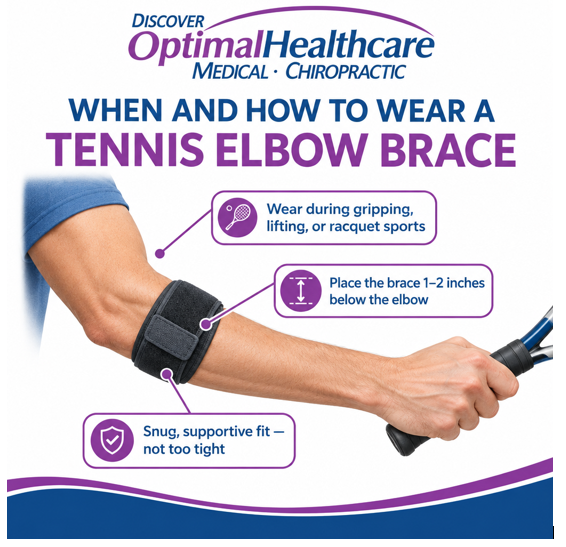
A brace may be most useful during activities that tend to provoke your symptoms, such as lifting, gripping tools, playing racquet sports, or performing repetitive work. If an activity consistently increases your pain, modifying or reducing that activity remains important rather than relying on the brace to compensate for it.
How to Wear a Tennis Elbow Brace Correctly
Position the brace on the upper portion of your forearm rather than directly over the elbow joint. Follow the manufacturer's positioning instructions, since designs differ.
It should feel secure without becoming excessively tight.
An effective practical measure is to test whether or not the individual feels comfortable. Your hand should not become cold, numb, or tingly while wearing the brace, and the brace does not cause excessive pressure or restrict normal movement. According to the American Orthopaedic Society for Sports Medicine, a counterforce strap should be fitted snugly but not tightly.
If you are unsure about placement, a physical therapist or other qualified clinician can demonstrate how to position it for your symptoms.
When Is It Time to Seek Professional Tennis Elbow Treatment?
Occasional elbow discomfort after an unusual activity may improve with appropriate rest and activity modification. Persistent symptoms are different.
If symptoms persist in spite of the self-treatment, cause hindrances in daily life and work, occur repeatedly, or result in difficulties with normal movement of the arm, a consultation with a medical professional should be sought.
At Discover Optimal, patients can explore tennis elbow treatment based on their individual symptoms and circumstances.
The objective is not simply to reduce pain temporarily. A proper assessment can help determine what is contributing to the problem and which treatment approach is appropriate.
Can You Cure Tennis Elbow Permanently?
There is no brace or single exercise that can guarantee a permanent cure. Tennis elbow can take weeks or months to settle, and recovery depends on factors such as activity, tendon health, rehabilitation, and symptom duration.
That is why searching for how to cure tennis elbow permanently can be misleading if it implies there is one universal solution.
If elbow pain is limiting your activities or refusing to settle, professional guidance can help you move beyond temporary symptom management. Discover Optimal offers tennis elbow treatment in Brookhaven for individuals seeking an evaluation and a treatment approach suited to their needs.
FAQs
Does a tennis elbow brace really work?
A counterforce brace may reduce symptoms for some people by reducing stress on the affected forearm tendons. It works best as one component of a broader treatment plan rather than as a standalone solution.
How tight should a tennis elbow brace be?
It should be snug and supportive, but not so tight that it causes numbness, tingling, swelling, or circulation problems. Follow the brace manufacturer's fitting instructions.
Can I sleep with a tennis elbow brace on?
Routine overnight use is not necessarily required. Unless your healthcare professional recommends it, wearing the brace during activities that aggravate symptoms may be more relevant than wearing it while sleeping.
How long should I wear a tennis elbow brace each day?
There is no definied duration that fits all. Instead of assuming that the longer its use will lead to quicker recovery, utilize it as directed by your symptoms, the type of activity performed, and on the advice of a medical professional.